




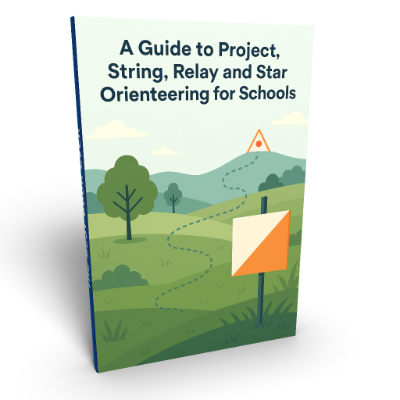
A Guide to Project, String, Relay and Star Orienteering
Original price was: $14.95.$4.95Current price is: $4.95.
Description
Navigating Success: A Guide to Project, String, Relay and Star Orienteering for Schools
In schools, orienteering serves as an excellent tool for developing essential life skills. It promotes teamwork, as students often participate in groups, encouraging communication and collaboration. Additionally, the activity fosters problem-solving abilities, as participants must devise the best routes to navigate between controls while considering various factors such as terrain, distance, and time constraints. Through orienteering, students learn to assess situations critically, a skill that will benefit them beyond the classroom.
Overview of Different Orienteering Types
 Orienteering is an outdoor navigation sport that combines running with navigation skills. There are various types of orienteering, each designed to cater to different skill levels and objectives. In schools, understanding the different types can enhance students’ engagement and learning outcomes, making orienteering a valuable addition to physical education curricula. This subchapter will provide an overview of Project, String, Relay, and Star Orienteering, highlighting their unique characteristics and benefits.
Project Orienteering is often used as a structured learning tool, where students work in teams to complete a specific navigation challenge. This type encourages collaboration and problem-solving among students as they plan their routes and make decisions on the move. The focus is not only on speed but also on strategy, which helps students develop important life skills such as communication and teamwork.
String Orienteering, on the other hand, is particularly suitable for younger children or beginners. In this format, a continuous string is laid out on a map, guiding participants through various checkpoints. This method simplifies navigation, allowing students to build confidence in their orienteering skills without the pressure of complex map reading. The visual aid of the string helps younger participants understand the concept of routes and checkpoints clearly.
Relay Orienteering introduces a competitive element, where teams race against each other to complete a course. Each member of the team runs a segment of the course before passing a baton to the next runner. This type emphasises both individual performance and teamwork, fostering a sense of camaraderie. Schools can leverage Relay Orienteering to instil a spirit of healthy competition while promoting physical fitness and cooperative learning.
Star Orienteering offers participants the chance to navigate from a central point to multiple checkpoints radiating outward. This format allows for flexibility in route choice and the opportunity for participants to challenge themselves. Star Orienteering can be tailored to various skill levels, making it an ideal option for a mixed-ability group. By incorporating these different types of orienteering into school programmes, educators can create dynamic and engaging learning experiences for students of all ages.
You must be logged in to post a review.
Related products
-
- Sale!
Orienteering: A Sport for All Ages & Abilities
- Original price was: $14.95.$4.95Current price is: $4.95.
- Add to cart
-
- Sale!
Family Fun in the Wild: Orienteering Activities for All Ages
- Original price was: $14.95.$4.95Current price is: $4.95.
- Add to cart
-
- Sale!
Map Reading Made Easy
- Original price was: $14.95.$4.95Current price is: $4.95.
- Add to cart

Reviews
There are no reviews yet.