




Getting Started with Orienteering – A Beginner’s Guide for Australians
What Is Orienteering?
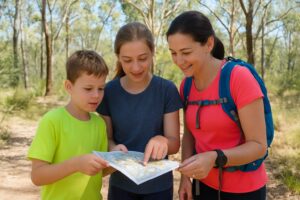 Orienteering is a navigation sport that blends physical fitness, map reading, and decision-making. The aim is simple: use a detailed map and compass to locate a series of checkpoints (“controls”) in the correct order, as quickly as possible.
Events are held in parks, bushland, urban streets, and forests across Australia, so there’s a course for every age and ability. Some people walk and enjoy the scenery; others race competitively. Either way, it’s a brilliant way to explore the outdoors.
Why Try Orienteering in Australia?
Australia’s diverse landscapes make it a perfect place for orienteering, from open bush and granite terrain to urban parklands and coastal dunes.
Here are a few reasons locals love it:
-
-
- Adventure anywhere: Every event takes you to a new map and a new challenge.
- All ages welcome: Courses range from beginner to elite, and family-friendly events are common.
- Mental challenge: It’s as much about thinking fast as running fast.
- Fitness without monotony: No two courses are the same, keeping every outing fresh.
-
Whether you’re in Victoria, New South Wales, or Queensland, you’ll find active clubs ready to welcome beginners.
How to Join Your First Orienteering Event
-
-
- Find a local club or event: Visit Find an Event or check the Orienteering Australia calendar for your state.
- Choose an easy course: Look for beginner or “novice” courses, usually short, with clear paths.
- Register online or on the day: Most clubs allow casual entries, so you can try before committing.
- Arrive early: You’ll get a map, a timing chip (if used), and a quick briefing.
- Go at your own pace: You don’t have to run; walking is perfectly fine.
-
Tip: Many clubs offer “Try Orienteering” days for free or low cost, a great way to learn the basics.
Essential Gear for Beginners
You don’t need expensive equipment to start. Most clubs supply maps and hire out timing chips, but having your own basics helps:
-
-
- Comfortable outdoor shoes (trail runners or grippy sneakers)
- Lightweight activewear, breathable, suitable for bush or park terrain
- Compass, a simple baseplate or thumb compass, works well
- Water bottle or hydration pack for longer courses
- Hat & sunscreen, essential under Aussie sun
-
Check out our Shop for beginner-friendly compasses, clothing, and hydration packs.
Map Reading Basics
At first glance, orienteering maps look complex, but once you learn the symbols, they make perfect sense.
-
-
- Contours: show hills and valleys; the closer they are, the steeper the slope.
- Green areas: vegetation (the darker the green, the thicker the bush).
- Blue features: water (creeks, ponds, marshes).
- Black features: man-made objects (tracks, fences, buildings).
-
Your goal is to navigate between control points efficiently. The fastest route isn’t always the straightest. Part of the fun is deciding which way is best!
Tips for a Great First Experience
✅ Start slow and focus on navigation, not speed.
✅ Check your compass regularly.
✅ Read the map while moving; glance ahead to plan your next leg.
✅ Ask for help; event volunteers love guiding newcomers.
✅ Stay aware of your surroundings and enjoy the adventure.
Once you complete your first course, you’ll quickly get hooked. Every map offers a new puzzle, and every event improves your skills.
Find Your Next Event or Club
Ready to try? Explore upcoming events and clubs near you:
Orienteering is more than a sport; it’s an adventure community. So, grab a map, step outside, and start exploring Australia one checkpoint at a time.